
Wednesday, November 04, 2026 | Today's Newsletter | Login
Asia Fuels Global Wildlife Trade Boom
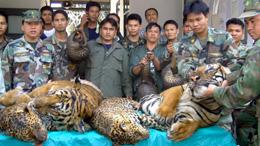
By Mata Press Service
Asia’s booming markets for exotic pets, traditional medicines and wildlife products are helping fuel a global trade involving far more species than previously estimated, with scientists warning that inadequate monitoring is leaving thousands of animals and plants vulnerable to overexploitation.
A major international study in the journal Science Advances found that at least 79,554 species are likely traded internationally for commercial purposes, while the broader number of species documented in use or trade could exceed 107,000.
That is more than double the previous estimate of approximately 50,000 species cited by a leading global scientific body.
The findings raise concerns for countries such as China, Indonesia, Japan and other Asian nations, where expanding wildlife markets, online sales and weak monitoring systems are making it increasingly difficult to determine whether species are being harvested sustainably.
The research, led by scientist Alice C. Hughes and an international team of conservation experts, found that existing wildlife trade databases capture only a fraction of the species being bought, sold and transported around the world.
Researchers identified up to 47,685 animal species in international trade, including as many as 31,306 vertebrate species, representing 42 per cent of all known vertebrates.
Approximately 65 per cent of bird species and 37 per cent of reptile species were recorded in trade, highlighting the scale of commercial activity that international conservation systems struggle to track.
The study identifies Asia as a region of particular concern because of rising demand for exotic pets, traditional medicines and wildlife products, often promoted through social media.
China and Japan were highlighted as markets where online platforms are helping popularize unusual species and making wildlife products easier to obtain.
Japan's demand for reptiles and invertebrates, including species rarely traded elsewhere, illustrates how regional consumer preferences can create new conservation pressures.
In Southeast Asia, Indonesia remains one of the world's major wildlife exporters, supplying a wide range of terrestrial and marine species to international markets.
Although Indonesia maintains annual harvesting and trade quotas covering hundreds of species, researchers found that information about wild populations remains inadequate.
Without reliable population data, authorities cannot confidently determine whether the number of animals being collected is sustainable.
The study also raised concerns about the Asian songbird crisis, driven by demand for cage birds across Southeast Asia.
The trade has placed pressure on wild bird populations, while gaps in national and regional monitoring make it difficult to establish the full scale of the problem.
China's role in the international trade in aquatic wildlife presents another challenge.
The researchers cited figures showing China accounted for 55 per cent of global eel demand in 2023 and more than half of global seahorse seizures.
An estimated 37 million seahorses are traded internationally each year, with about 95 per cent originating from countries where commercial international trade in wild-sourced specimens has been banned under international conservation rules.
The international eel trade, worth an estimated US$1 billion annually, demonstrates how lucrative markets can encourage mislabelling, illegal shipments and the diversion of trade through intermediary countries.
Researchers warned that restrictions on one species can sometimes shift demand to other species or push commerce into less visible markets.
The study found that legal wildlife trade is worth an estimated US$220 billion to US$300 billion annually, compared with US$28.4 billion to US$39.5 billion for illegal wildlife commerce.
Yet much of the international conservation effort remains focused on trafficking and seizures, while the far larger legal trade receives insufficient scrutiny.
The Convention on International Trade in Endangered Species of Wild Fauna and Flora (CITES), the principal international agreement governing wildlife commerce, maintains millions of records but covers only a subset of the species involved in trade.
Researchers warned that global indicators used to assess progress towards biodiversity conservation targets reflect less than two per cent of species in use or trade under some measures.
The information gap is particularly serious for plants used in traditional medicines, a major market across Asia.
The study identified at least 49,723 plant species documented in trade, while the broader total of plants and fungi recorded in use or trade reached 59,671 species.
However, researchers cautioned that plants used locally for medicine, food or other purposes are not necessarily involved in international commerce.
The report also found that the United States operates one of the few comprehensive, publicly accessible wildlife trade databases.
Its monitoring system has recorded more than 21,000 wild animal species entering the country since 2000, including thousands missing from international databases.
Comparable information remains largely unavailable elsewhere.
A review drawing responses from 61 countries found that most lacked comprehensive systems for tracking wildlife trade beyond internationally protected species.
The researchers called for better electronic tracking, standardized reporting and closer cooperation between countries to identify species being traded and monitor the impact on wild populations.
They suggested artificial intelligence, automated customs records and digital permits could help detect mislabelled shipments and suspicious trading patterns.
The study acknowledged that well-managed wildlife commerce can support local livelihoods, food security and conservation, particularly in communities dependent on natural resources.
But without reliable data on harvesting levels and wild populations, governments cannot determine whether trade threatens species survival.
For Asia, where growing consumer demand intersects with some of the world's richest biodiversity, the findings point to an urgent need for stronger monitoring before more species are pushed towards extinction.
The researchers warned that the true scale of wildlife trade has probably been underestimated for decades, leaving governments unable to fully assess the damage or measure progress towards international conservation goals.
Leave a comment